
Excel library
Use One Slicer for Multiple Pivot Tables from Different Data Sources
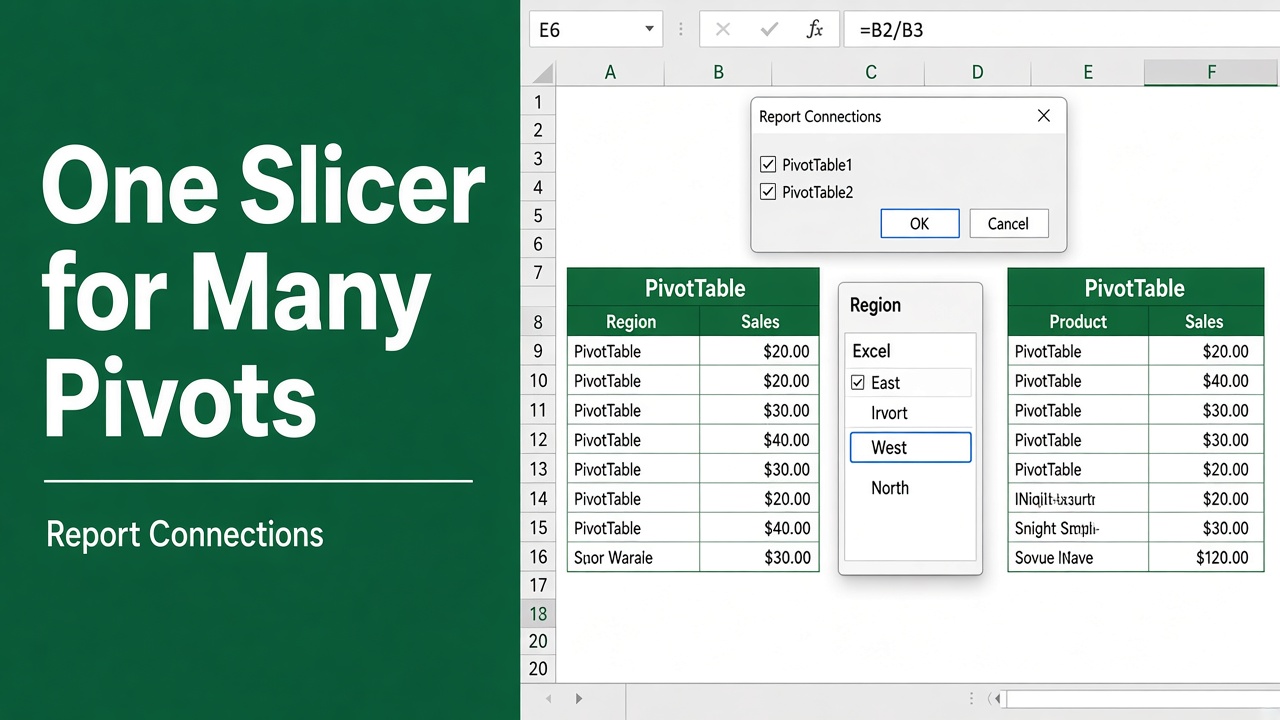
If you work with reports in Microsoft Excel, you already know how useful Pivot Tables and Slicers are.
But when your data comes from different sources, connecting one slicer to multiple pivot tables can feel confusing.
The good news, you can do this easily using the Data Model and a simple technique called a helper table. In this guide, we will walk you through everything step by step.
Why Use One Slicer for Multiple Pivot Tables
Using a single slicer gives you:
- Centralized filtering
- Cleaner dashboards
- Faster analysis
- Better user experience
Instead of adjusting filters in each pivot table, you control everything with one click.
The Real Problem with Different Data Sources
Excel only allows slicers to connect multiple pivot tables when:
- They share the same Pivot Cache, or
- They are connected through the Data Model
If your pivot tables come from different sheets or tables, they remain disconnected. That is why your slicer does not work across them.
The Complete Solution: Data Model + Helper Table
To make this work properly, you need two things:
- Data Model to connect all tables
- A Helper Table (Dimension Table) with unique values
This helper table acts as a bridge between all datasets.
Step-by-Step Guide
1. Prepare Your Data
Start by organizing your datasets.
Convert each dataset into an Excel Table:
- Click inside your data
- Press Ctrl + T
- Assign a name
Example:
| Table Name | Description |
|---|---|
| Sales | Sales transactions |
| Returns | Returned items |
| Regions | Unique list of regions |
2. Create a Helper Table (Critical Step)
This is the step most people miss.
You need a table that contains unique values for the slicer.
How to create it:
- Copy the column (for example, Region) from your main data
- Paste it into a new sheet
- Go to Data → Remove Duplicates
- Convert it into a table (Ctrl + T)
- Name it (e.g., Regions)
Now you have a clean list of unique values.
👉 This table will power your slicer.
3. Load All Tables into Data Model
Now add every table to the Data Model.
Steps:
- Click inside a table
- Go to Insert → Pivot Table
- Check Add this data to the Data Model
- Click OK
Repeat this for:
- Sales
- Returns
- Regions
4. Create Relationships Between Tables
Now connect your tables.
You can also add slicer in a Pivot Table.
- Go to Data → Manage Data Model
- Open Diagram View
- Create relationships
Example:
| From Table | Column | To Table | Column |
|---|---|---|---|
| Sales | Region | Regions | Region |
| Returns | Region | Regions | Region |
This creates a structure similar to a database.
The Regions table becomes the central link.
5. Create Pivot Tables
Now create your pivot tables.
- Go to Insert → Pivot Table
- Select Use this workbook’s Data Model
- Build your reports
Example:
- Pivot Table 1 → Sales by Branch
- Pivot Table 2 → Returns by Branch
Both are now connected through the Data Model.
6. Insert a Slicer from Helper Table
Now create the slicer.
- Click any pivot table
- Go to PivotTable Analyze → Insert Slicer
- Click All to view all tables
- Select the field from Regions table
- Click OK
👉 Important: Always choose the slicer field from the helper table, not raw data.
7. Connect Slicer to Multiple Pivot Tables
Final step:
- Click the slicer
- Go to Report Connections
- Select all pivot tables
- Click OK
Now your slicer controls all pivot tables.
Example Scenario
You have:
- Sales data
- Returns data
- Regions helper table
When you select “North” in the slicer:
- Sales pivot updates
- Returns pivot updates
Everything syncs instantly.
Common Mistakes to Avoid
1. Skipping the Helper Table
Without it, slicers may not filter properly across datasets.
2. Not Adding to Data Model
This breaks the connection between pivot tables.
3. Incorrect Relationships
Make sure fields match correctly (Region to Region).
4. Creating Slicer from Wrong Table
Always use the dimension table, not raw data.
Final Thoughts
Using one slicer for multiple pivot tables from different data sources becomes easy once you understand two things: the Data Model and the helper table approach.
This method gives you more control, cleaner dashboards, and faster reporting. Once you set it up correctly, you can reuse the same structure for many reports.
If you are building Excel dashboards regularly, this is a technique worth mastering.
Frequently Asked Questions
Can I use one slicer for multiple pivot tables from different data sources in Excel?
Yes, you can use one slicer for multiple pivot tables from different data sources by adding all data into the Data Model and creating relationships between tables. This allows the slicer to control all connected pivot tables.
Why is my slicer not connecting to multiple pivot tables?
This usually happens when pivot tables are created from different data sources without using the Data Model. Excel only allows slicers to connect when pivot tables share the same data model or pivot cache.
What is the Data Model in Excel?
The Data Model in Excel allows you to combine multiple tables, create relationships between them, and build advanced pivot tables. It helps in managing data from different sources efficiently.
Do I need Power Pivot to connect slicers across multiple pivot tables?
You do not always need Power Pivot, but it enhances the Data Model functionality. In most modern versions of Excel, the Data Model feature is available by default when creating pivot tables.
Can I connect a slicer to pivot tables on different worksheets?
Yes, a slicer can control pivot tables across different worksheets as long as they are connected to the same Data Model. You can use the Report Connections option to link them.
What fields should I use for creating relationships between tables?
You should use common fields like IDs such as Product_ID, Region_ID, or Customer_ID. These fields act as keys to connect tables and enable proper filtering across pivot tables.